Blog
Why Wizard Trees Genetics Are Popular in Europe

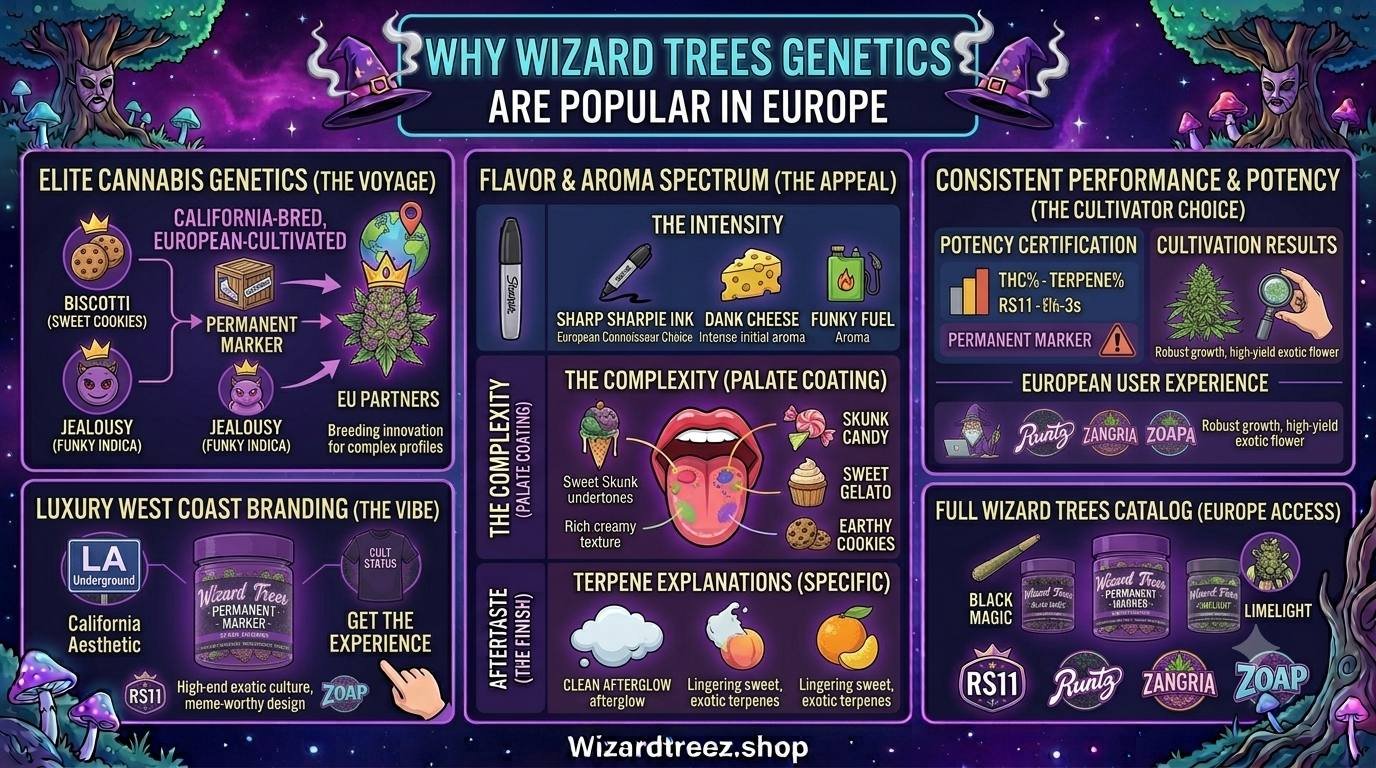
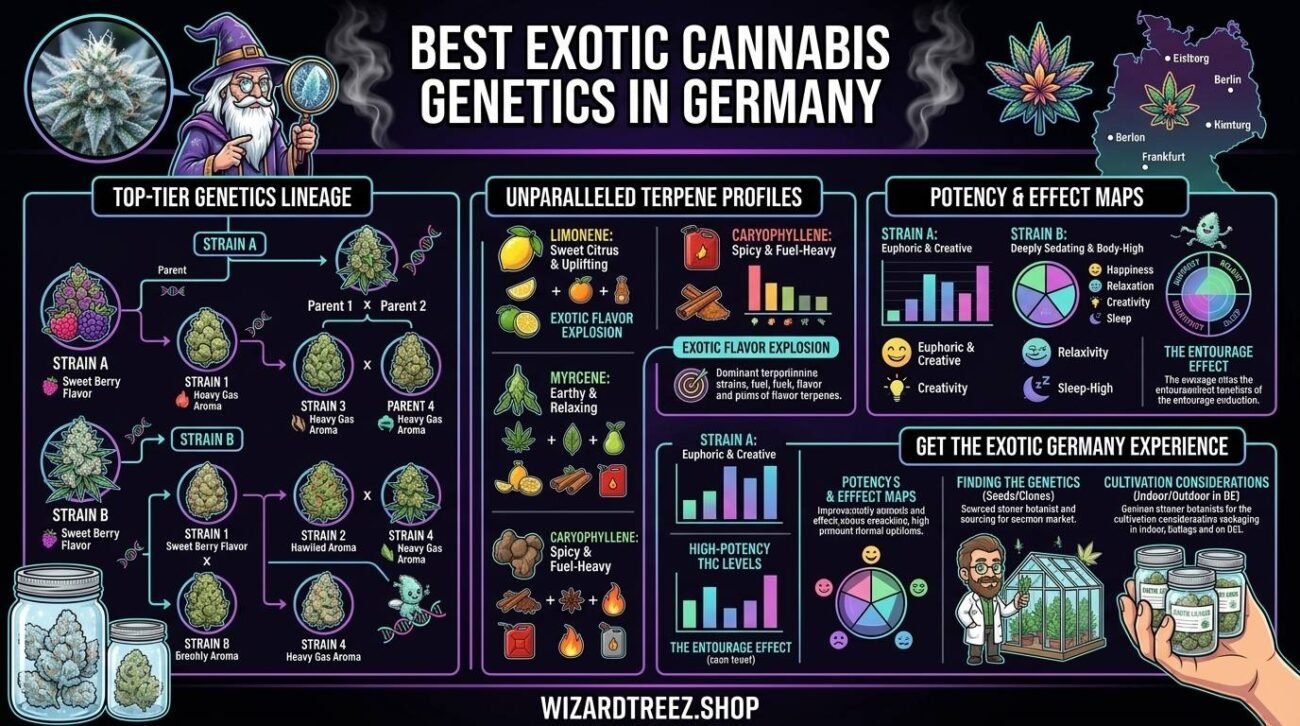
Why Wizard Trees genetics are popular in Europe comes down to a combination of distinctive terpene profiles, influential strain selections, premium presentation and a European cannabis audience that increasingly values flavour as much as potency.
Wizard Trees became closely associated with modern cultivars such as RS11, RS54, Zangria, Tea Time and Zoza—names that fit naturally into Europe’s growing interest in boutique American genetics. Rather than relying on THC numbers alone, these cultivars are recognised for layered candy, fruit, floral, gas and sherbet profiles that remain identifiable from the jar to the final exhale.
Their popularity is also cultural. European consumers, breeders and collectors are following California genetics more closely than ever, while major events, social media and international seed access have reduced the distance between Los Angeles breeding culture and markets such as Germany, Spain, the United Kingdom and the Netherlands.
Why Wizard Trees Genetics Are Popular in Europe’s Flavour-First Market
Premium cannabis has moved beyond the period when appearance and potency were enough to define quality.
Experienced consumers now discuss flower through details such as:
- Whether the aroma carries into the flavour
- How clearly the terpene layers can be separated
- Whether the strain has a recognisable identity
- How well the profile survives drying and curing
- Whether different batches remain reasonably consistent
Wizard Trees genetics align closely with that flavour-first mindset. Many of the brand’s best-known cultivars combine bright candy or fruit notes with enough gas, cream, spice or floral depth to avoid tasting one-dimensional.
This matters in competitive European markets. A strain that simply smells “sweet” can disappear among dozens of similar options. A cultivar with a recognisable mix of guava, sherbet, citrus, perfume and fuel is easier to remember, discuss and seek out again.
RS11 Created a Strong Foundation
RS11 is one of the central reasons Wizard Trees gained international recognition.
The cultivar comes from the Rainbow Sherbert project created by DEO Farms, with Wizard Trees becoming closely associated with selecting and popularising RS11 and its sister selection, RS54. That distinction is important: Wizard Trees did not create the original RS line, but its selections helped turn those genetics into globally recognised expressions.
RS11 offered something that travelled well across markets. Its profile could combine:
- Tropical fruit
- Sour citrus
- Berry sweetness
- Creamy sherbet
- Floral character
- Soft gas and spice
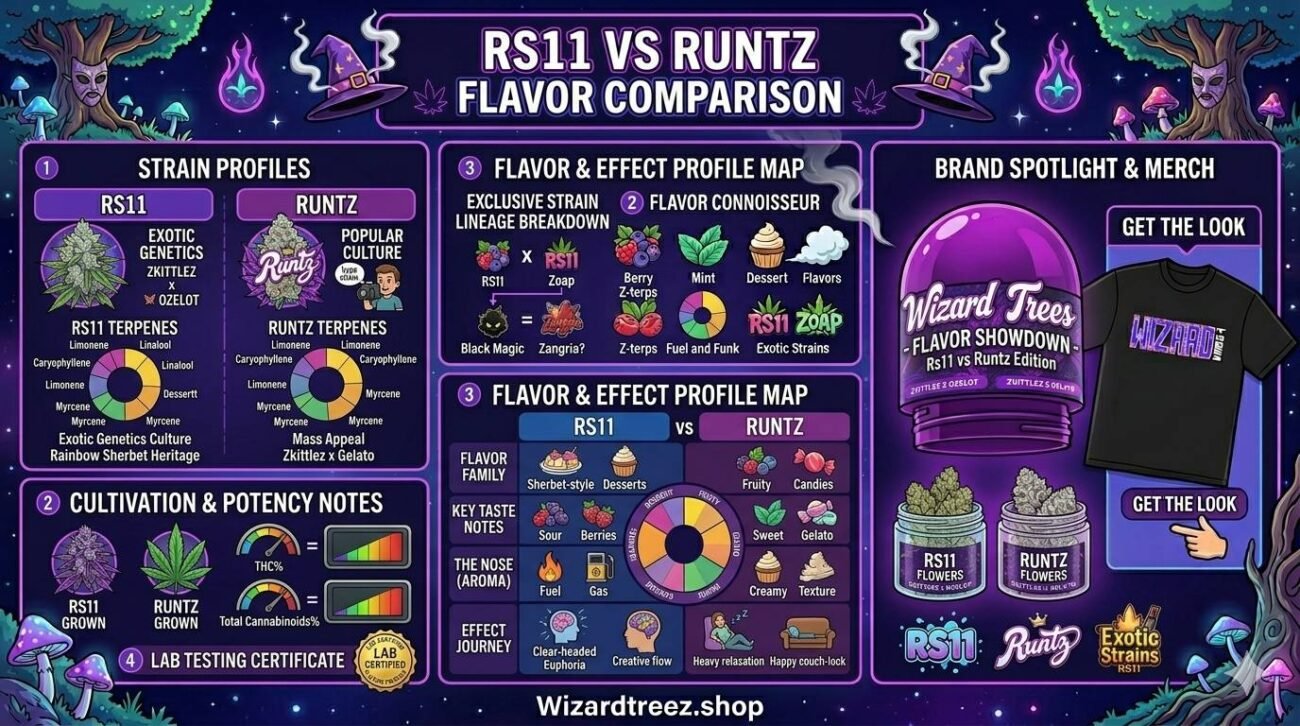
Those traits were familiar enough to appeal to fans of Z-style and Sherb-influenced cannabis, yet specific enough for RS11 to establish its own identity.
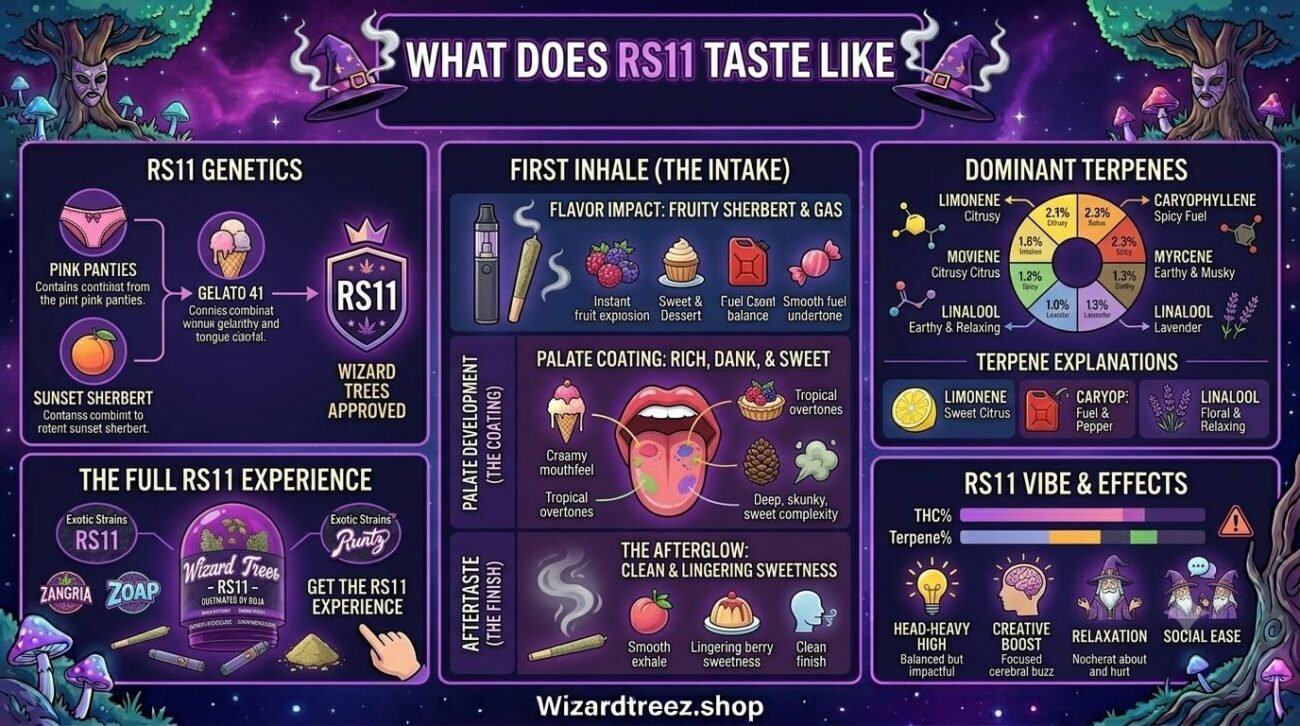
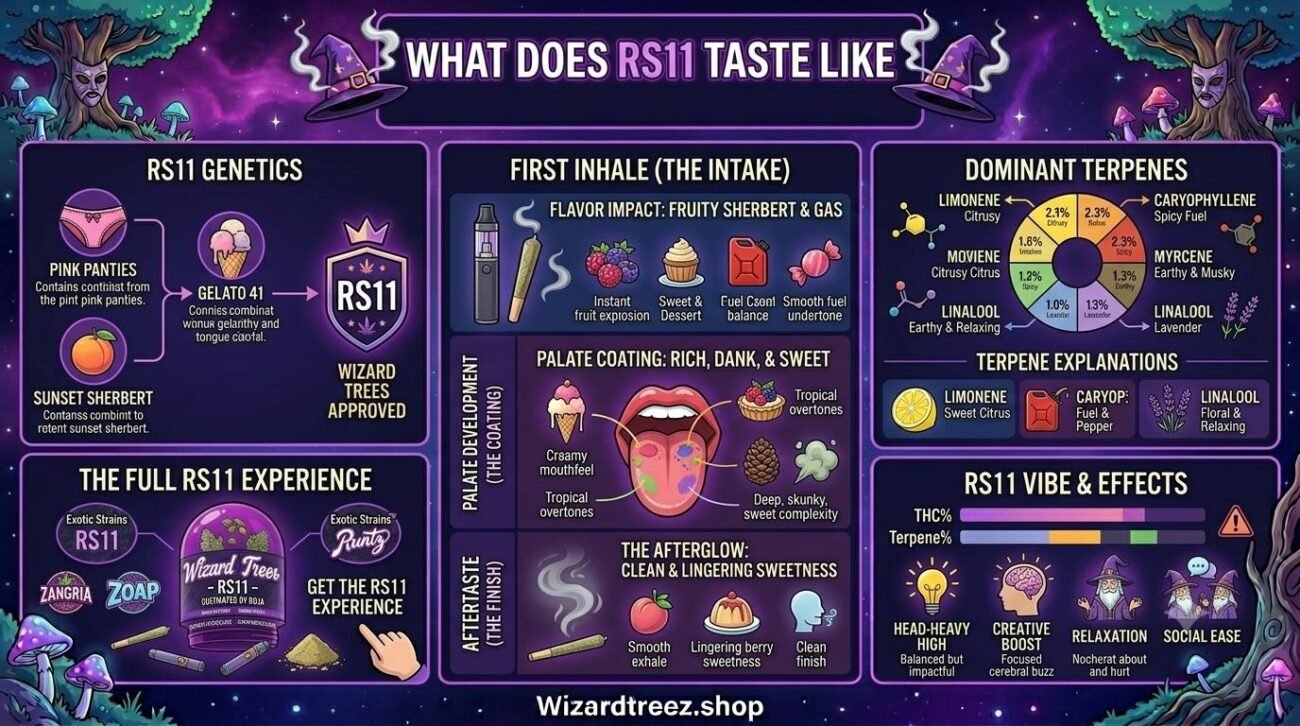
Readers exploring the profile in more detail can see What Does RS11 Taste Like? for a closer breakdown of its fruit, citrus, cream and gas notes.
RS11 also became a useful breeding foundation. Once a selection earns recognition for flavour, resin and visual appeal, crossing it with complementary cultivars can produce new expressions without completely losing the character that made the original valuable.
European Consumers Are More Educated About Genetics
Cannabis consumers across Europe are not one uniform audience. Laws, access, product formats and cultural preferences vary considerably between countries.
However, the wider market has become increasingly genetics-aware.
Consumers who once asked only whether a strain was indica or sativa are now more likely to ask:
- Who bred it?
- What is the lineage?
- Is it an authentic selection?
- Which phenotype is being offered?
- What terpenes dominate?
- Was it produced from seed or a verified clone?
- Does the flower match the expected profile?
That level of attention benefits breeders and brands with a clear genetic identity.
Wizard Trees strains are discussed through recognisable names and family lines rather than generic categories. RS11, Zangria, Tea Time and Zoza each carry their own cultural and flavour associations, helping consumers understand them as individual cultivars rather than interchangeable “exotic” flower.
The wider scale of European interest is reflected in the EUDA’s 2026 European cannabis overview, although regulations and legal access remain different across individual countries.
The Genetics Match Modern Indoor Production
Much of Europe’s premium cannabis culture is closely connected to controlled indoor growing.
Indoor environments allow cultivators to manage lighting, temperature, humidity and airflow more precisely than most outdoor settings. That control can help growers pursue the dense structure, resin coverage, colour and aroma associated with contemporary boutique flower.
Genetics still determine the ceiling. Environmental control cannot create a terpene profile that the plant does not possess, but it can help preserve and express existing potential.
Wizard Trees genetics attract indoor growers because the desired end product is usually clear:
- Strong bag appeal
- Noticeable resin production
- Complex aromatic expression
- Dense, carefully structured flower
- Profiles suited to premium flower and solventless evaluation
That does not mean every Wizard Trees cultivar behaves identically or that every seed produces the same result. Phenotypic variation remains part of growing from seed, and some selections may require more attention than others.
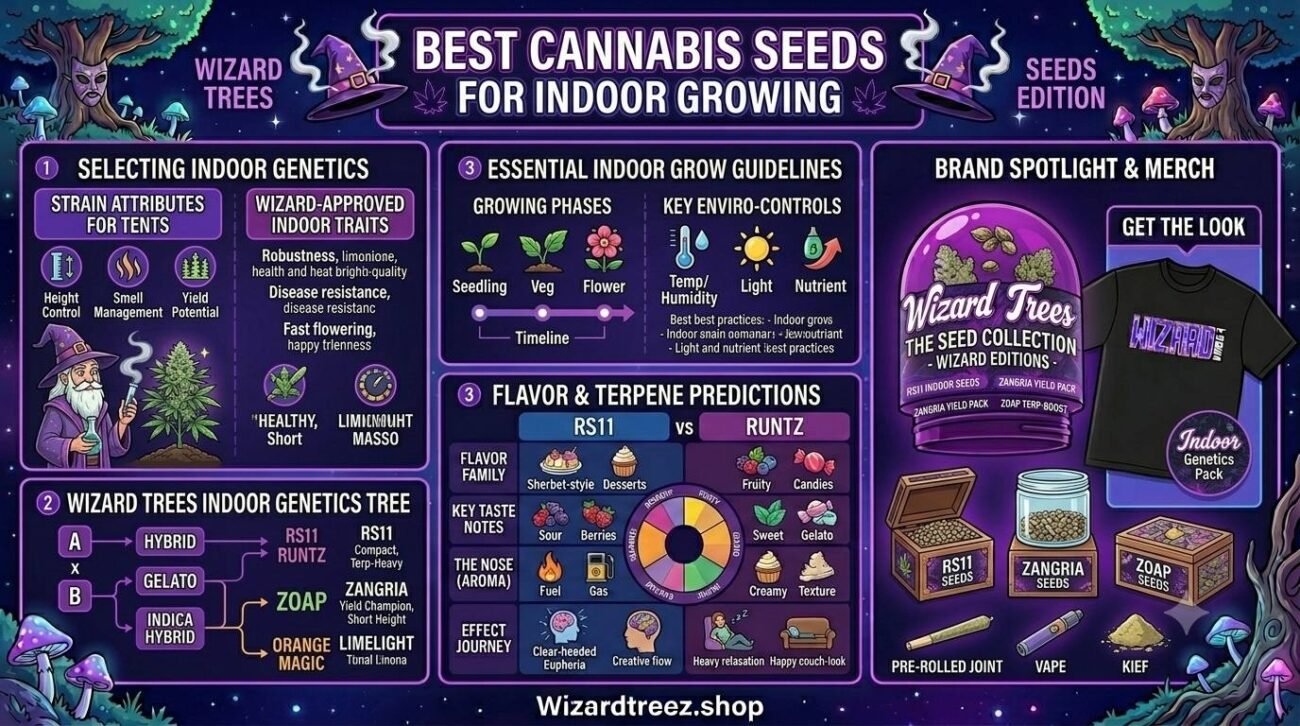
Cultivators comparing traits such as structure, flowering behaviour and aromatic potential can read Best Cannabis Seeds for Indoor Growing for a broader genetics-selection guide.
Wizard Trees Offers More Than Generic Candy Terps
Candy genetics have become widespread. That popularity has also created fatigue.
European consumers now encounter countless products described with the same language: sweet, fruity, creamy, exotic and gassy. When every strain is marketed in similar terms, the cultivars with sharper identities stand out.
Wizard Trees has remained relevant by working within the candy-gas category while exploring different directions inside it.
Some expressions lean tropical and juicy. Others emphasise red fruit, floral perfume, citrus, sherbet or heavier fuel. This creates enough continuity for the genetics to feel connected while allowing individual cultivars to remain distinct.
The appeal is similar to why Permanent Marker became such a recognised modern cultivar. Its chemical, floral and candy-gas profile is memorable because it does not smell like a generic dessert hybrid. Our Permanent Marker strain review explores that same demand for unusual, instantly recognisable terpene identity.
European connoisseur culture increasingly rewards these profiles. The question is not simply whether flower smells strong, but whether someone could recognise it again without seeing the label.
Premium Visual Identity Strengthens the Genetics
Genetics may create the product, but presentation shapes how people first understand it.
Wizard Trees built a visual identity that matches the positioning of its cultivars: colourful, polished, exclusive and rooted in modern streetwear-influenced cannabis culture. Packaging, photography, strain naming and event presentation all contribute to the impression that each release belongs to a larger world.
This is especially effective in Europe, where American cannabis branding often carries cultural influence beyond the availability of the flower itself.
People may first encounter a strain through:
- Instagram content
- Event displays
- Seed packaging
- Collaborations
- Grower photographs
- Menu listings
- Reviews and cultivation diaries
By the time they encounter the genetics directly, they may already recognise the name and visual language.
Branding cannot compensate for weak flower over the long term, but strong genetics combined with consistent presentation create a more complete identity than either element could achieve alone.
Cannabis Events Accelerate European Recognition
Events have become important meeting points between North American genetics and European cannabis culture.
Major expos bring together seed companies, equipment manufacturers, cultivators, patients, advocates, media platforms and consumers. They allow people to see which genetics are receiving attention, compare breeding directions and connect online reputation with a physical presence.
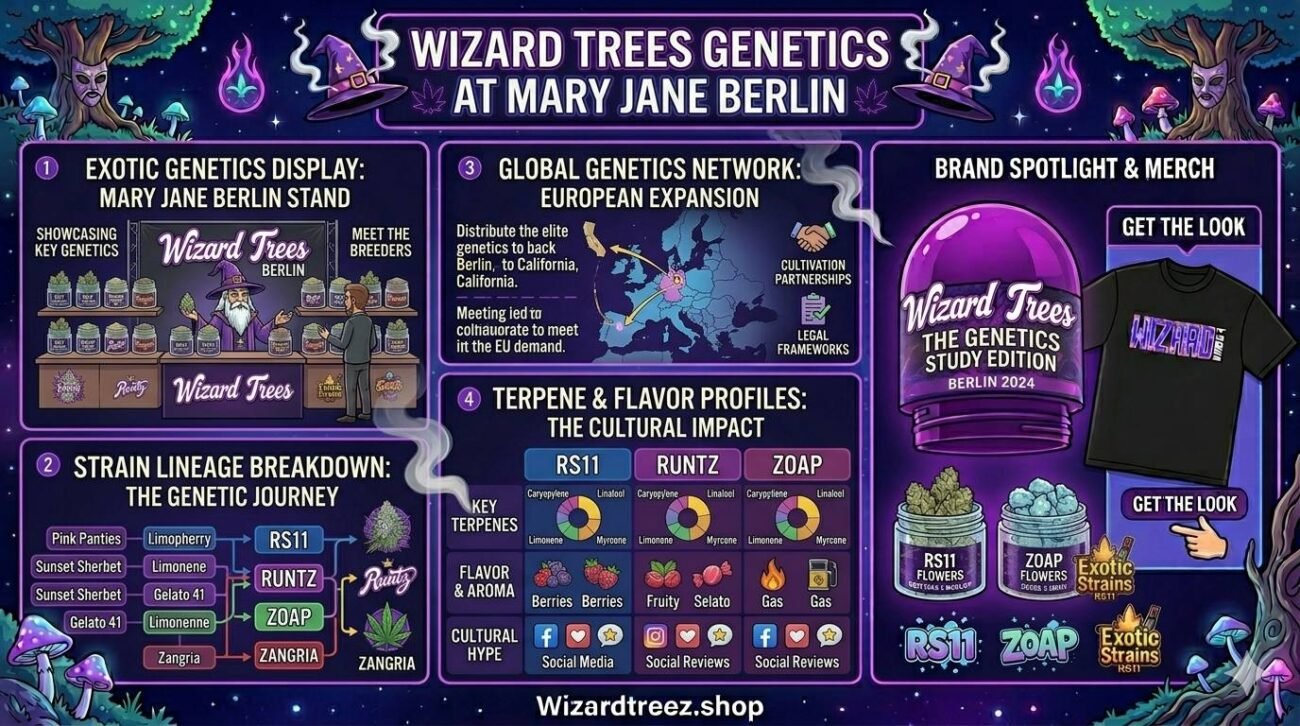
Berlin is particularly influential because it attracts visitors from across Germany and neighbouring European markets. Spain also plays an important role through Barcelona’s established cannabis-event and social-club culture.
At these events, a cultivar is no longer just a name seen online. People can discuss lineage, examine branding, meet growers and compare how different European producers express the same genetics.
This direct contact helps explain why certain American breeders gain recognition faster than they would through traditional advertising alone. Cannabis culture remains heavily driven by community recommendation, shared experience and visual proof.
Accessibility Has Helped the Genetics Travel
International popularity requires more than hype. Growers need a realistic route to the genetics.
Wizard Trees’ official platform separates seed access by region, including a dedicated European channel. That regional approach reduces some of the uncertainty European collectors face when sourcing releases from North American breeders.
Authenticity remains important because popular strain names are frequently reproduced or attached to unrelated material. A package labelled RS11 does not automatically prove that it comes from the recognised line or selection.
Experienced buyers therefore pay attention to:
- The original breeder or authorised source
- Packaging and verification
- Release history
- Retailer reputation
- Lineage accuracy
- Community grow reports
The more valuable a name becomes, the more carefully authenticity should be evaluated.
From Genetics to Recognisable Product Formats
Strong genetics can carry their identity across several formats.
A cultivar with a clear terpene profile may be presented as flower, a pre-roll, solventless concentrate or a breeding parent. Although each format changes the experience, consumers still expect the central character of the genetics to remain identifiable.
Pre-rolls are particularly relevant in European event and social settings because they offer a straightforward format without requiring consumers to assess or prepare whole flower. The Zoza Pre-Rolls page provides an example of how a recognised Wizard Trees cultivar can move from genetic identity into a convenient finished format.
Quality still depends on the material used. A pre-roll made from properly handled, terpene-rich flower should preserve more of the cultivar’s identity than one filled primarily with dry, low-aroma material.
Scarcity Adds to the Appeal—but It Is Not the Whole Story
Limited releases naturally create attention.
When sought-after seed packs, clones or flower batches are difficult to access, collectors and growers may place greater value on them. Social media amplifies this effect by turning each release into an event.
Scarcity alone, however, cannot explain sustained popularity.
Cannabis audiences move quickly. A brand built only on limited availability may attract temporary hype, but it will struggle to remain relevant when consumers encounter the actual genetics.
Wizard Trees has maintained interest because the scarcity is attached to cultivars with identifiable qualities:
- Recognisable terpene profiles
- Strong visual expression
- Influential genetic connections
- Breeding potential
- Cultural visibility
- Memorable strain names
The genetics provide substance beneath the release culture.
What European Growers Look for in Wizard Trees Genetics
The most serious growers are usually not selecting genetics based on photographs alone.
They may evaluate:
Terpene clarity
Does the plant produce a strong and distinguishable profile, or does it become generic after curing?
Phenotypic potential
Does the seed population offer enough variation to find an exceptional keeper while remaining connected to the stated lineage?
Flower structure
Will the plant produce the density, resin and visual finish expected within the premium market?
Cultivation practicality
Does the cultivar respond well to controlled indoor conditions, and can its structure be managed within the available space?
Market identity
Will consumers recognise and request the cultivar, or will it require significant education before gaining interest?
Wizard Trees genetics sit at the intersection of these priorities. They have existing name recognition while still offering growers the opportunity to select distinctive expressions.
The European Appeal Is Cultural and Genetic
Why Wizard Trees genetics are popular in Europe cannot be reduced to one strain or one marketing campaign.
Their appeal comes from the way several factors reinforce each other:
- RS11 and related selections established genetic credibility.
- Flavour-first profiles match modern European connoisseur preferences.
- Indoor growers value resin, structure and terpene expression.
- Strong branding makes each release easier to recognise.
- Events connect American breeding culture with European audiences.
- Regional seed access gives collectors a clearer path to legitimate genetics.
- Limited releases preserve a sense of exclusivity.
Most importantly, Wizard Trees arrived with genetics suited to the current moment. European cannabis culture is becoming more specific, more visually aware and more interested in provenance. Consumers increasingly want to know what they are experiencing, where it came from and why it tastes different.
Wizard Trees fits that shift because its strongest cultivars offer an identifiable experience rather than a generic promise of “premium exotic” flower.
Final Perspective
Wizard Trees genetics are popular in Europe because they combine credible selections, bold terpene profiles and a brand identity that translates naturally across borders.
RS11 helped establish the foundation, but the wider catalogue has allowed the brand to remain relevant beyond a single cultivar. Each recognised release contributes to a larger flavour-driven ecosystem built around fruit, sherbet, floral notes, candy gas and resin-rich flower.
Europe’s cannabis laws and markets remain fragmented, and popularity differs by country. Even so, the direction is clear: growers and informed consumers are paying closer attention to lineage, authenticity and sensory quality.
In that environment, Wizard Trees genetics have the qualities required to remain part of the conversation—recognisable names, memorable flavours and enough breeding influence to extend far beyond the original California scene.